Home Travel
Category:

Travel

Advertising

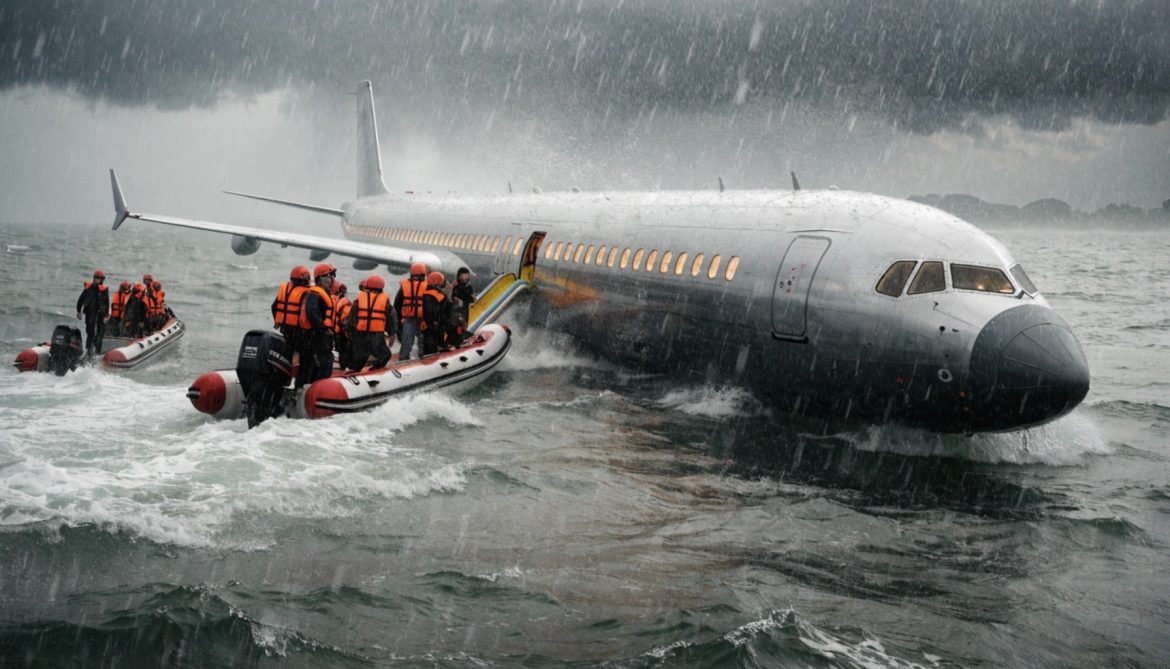
The twin-engine aircraft, carrying 58 passengers and four crew members, was forced to ditch in a river after both engines failed shortly after takeoff. With no time to reach an airport, the pilot made a split-second decision that would save every soul on board.

Witnesses watched in disbelief as the plane descended smoothly toward the water, touching down with remarkable precision before floating momentarily on the surface.

“It was like watching a movie,” said one eyewitness from a nearby bridge. “The plane just glided down and hit the water — I couldn’t believe it stayed in one piece.”

Within minutes, emergency services rushed to the scene. Rescue boats surrounded the aircraft as passengers emerged through emergency exits onto the wings, some visibly shaken but miraculously uninjured.

The pilot, identified as Captain Michael Reeves, a 20-year aviation veteran, credited his training and a lot of luck.

“You train for this your whole career, but you never want to use it,” Reeves said later. “When both engines went quiet, I just focused on one thing: keeping that plane level and hitting the water as softly as possible.”

All passengers were evacuated safely, with only minor injuries reported. The aircraft remained afloat long enough for everyone to escape before it began to sink.

Local authorities launched an investigation into the engine failure, but one thing is already clear: the pilot’s skill and composure turned a potential tragedy into a miracle.

“Captain Reeves is a hero,” said the airline’s CEO at a press conference. “Thanks to him, 62 people are going home to their families tonight.”

For the passengers, it was a flight they’ll never forget — for all the right reasons, thanks to the calm hands of the man in the cockpit.


Advertising

A urban explorer got the fright of his life — and the discovery of a lifetime — after accidentally falling through a hidden hatch into an abandoned underground bunker.

The host of a popular exploration channel was hiking through a wooded area when the ground suddenly gave way beneath him. He tumbled several meters into complete darkness, landing in what turned out to be a long-forgotten Cold War-era bunker.

“One second I’m walking, the next I’m falling into a hole. When I turned on my phone light, I couldn’t believe my eyes.”

What he found inside defied all expectations:

The bunker was eerily preserved — military uniforms hung on racks, dusty radio equipment sat on desks, and rows of canned supplies lined the walls. But the real shock came when he ventured deeper.

In a sealed room at the end of a corridor, he discovered dozens of wooden crates marked with foreign insignia. After prying one open, he found what appeared to be WWII-era artifacts — medals, documents, and what looked like personal belongings of soldiers.

“This isn’t just a bunker,” he whispered in the video. “This is a time capsule. Nothing has been touched for maybe 80 years.”

Within days, the footage amassed millions of views, sparking intense debate among historians and military enthusiasts. Some claimed the bunker might have been used for covert operations, while others suggested it was simply a forgotten supply depot.

Local authorities have since sealed the entrance and launched an investigation. Historians are now working to document the site before any items are removed.

“I came here for a quiet hike,” the blogger laughed nervously. “I left feeling like I’d walked into 1945.”

Advertising

A blogger exploring an industrial wasteland got the shock of his life when he pried open a rusty, abandoned shipping container — and discovered something he never expected.

The host of a popular YouTube channel about abandoned places was filming in a forgotten port area when he spotted a single container tucked away behind overgrown weeds. Assuming it was empty trash, he decided to break it open for content.

What he found inside stopped him mid-sentence.

“I literally froze,” the blogger said in his viral video. “I thought it was going to be garbage or maybe old furniture. But this… this is insane.”

Inside the container were dozens of sealed wooden crates labeled “Fragile — Handle with Care.” After prying one open, the blogger uncovered what appeared to be ancient artifacts — Roman-style pottery, bronze figurines, and what looked like Celtic jewelry.

“I’m no archaeologist, but these don’t look like props,” he said, visibly shaking. “Either someone’s hiding a museum in here, or I just stumbled onto something huge.”

Within hours, the video racked up millions of views. Commenters flooded the feed with theories — from lost art collections to smuggled antiquities.

Local authorities have since cordoned off the area and launched an investigation. Early reports suggest the container may have been lost years ago during a storm and somehow ended up buried in the overgrown lot.

“I came here looking for abandoned junk,” the blogger laughed. “I think I found a little more than that.”

Advertising

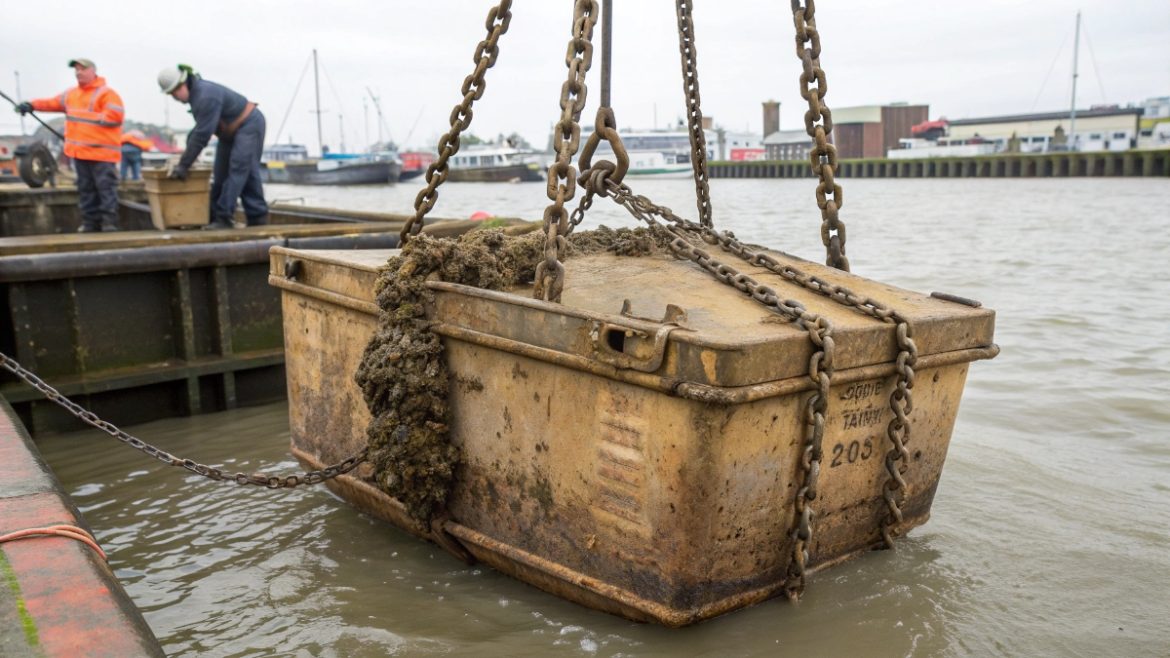
A fishing crew hauled a rusted container from the sea off Cornwall—and found a fortune in ancient artifacts inside.

The Sea Serpent crew initially thought they’d snagged debris. Instead, they uncovered Roman pottery, Greek bronze figures, and Celtic jewelry.

“We nearly fell overboard,” said Captain Tom Hawkins. “It was packed like a time capsule.”

The container reportedly belongs to Italian billionaire Alessandro Rossi, whose cargo ship lost several containers in a 2022 storm off Ireland. The collection was destined for his private museum.

Recovered items include:

  • Roman amphorae

  • Ancient Greek figurines

  • Celtic jewelry

  • Roman shield fragment

Maritime archaeologist Dr. Eleanor Vance called it “a miraculous discovery.”

Rossi offered a reward at the time, but the search was abandoned after six months.

Marine expert Captain Robert Shaw said: “Finding this intact three years later? Better odds than winning the lottery.”

The fishermen now wait to learn their salvage reward while authorities secure the artifacts.

Advertising

A passenger train travelling from Glasgow to London derailed in northwest England on November 3, 2025, after striking a landslip caused by heavy rainfall, emergency services and rail investigators have confirmed.

The Avanti West Coast service, which had departed Glasgow Central at 04:28, came off the tracks at approximately 06:10 near the village of Shap in Cumbria. The train was carrying 86 passengers and nine staff members at the time of the incident, and was travelling at around 83 mph (134 km/h) when it hit debris washed onto the line.

Despite the seriousness of the derailment, which saw the first bogie lift off the rails and run derailed for approximately 560 metres, only four people sustained minor injuries. All were treated at the scene, and none required hospitalisation. The front carriage left the tracks but remained upright, which likely prevented more serious casualties.

Emergency services declared a “major incident” and dispatched multiple police, fire and ambulance crews to the remote location. All passengers were safely evacuated from the train.

The Rail Accident Investigation Branch (RAIB) launched an immediate inquiry into the derailment. Preliminary findings indicate that the incident occurred during a period of “heavy and sustained rainfall” which caused a drainage channel to become overwhelmed.

“The landslip occurred during a period of heavy and sustained rainfall,” the RAIB stated. “A drainage channel, which runs across the slope above the washed-out material, was unable to accommodate the volume of water which was present. This led to the slope material below becoming saturated, initiating the landslip”.

Further investigation revealed that remote monitoring equipment installed at the site had failed to detect the landslip in time to prevent the accident. The sensors, designed to detect ground movement, were recording data but had not been formally entered into operational use, meaning they were not sending alerts to the Network Rail control centre. When the landslip occurred at around 04:30, the sensors were quickly overwhelmed and buried, preventing them from transmitting warnings.

Advertising

Saving money while traveling doesn’t mean sacrificing comfort and experiences. Start by setting a budget for each destination, including transportation, accommodation, food, and entertainment. Whenever possible, use discounts, loyalty programs, and early booking — this often brings significant savings. Don’t forget about free or inexpensive entertainment: museums with entrance on certain days, nature walks, free excursions, and tourist routes around the city.

Pages: 1 2

Advertising

Advertising

Fast-changing circumstances are a normal part of any trip. To stay on course, it is recommended to think through several alternative scenarios in advance: a backup route, a backup area of ​​residence, alternative attractions. This allows you to remain calm and confident when unforeseen situations arise along the way.

Pages: 1 2

Advertising

If you are tired of overcrowded tourist spots, it is worth exploring less popular destinations while maintaining a high level of service and safety. Start with maps of the area and local routes that are often skipped by guides and travel aggregators. In such places, you will be able to see genuine culture, try authentic cuisine and feel the rhythm of the city or region without crowds.

Pages: 1 2

Advertising

Planning a route is the key to a smooth and efficient trip. Start by defining your goals: what exactly you want to see, what experiences you want to have, and how much time you are willing to spend on the road. Then create a rough schedule: break the route into days, highlight key points of interest, and leave room for spontaneous stops. This approach will help avoid overloading the program and give you freedom of choice as new opportunities arise.

Pages: 1 2

Advertising